
Ceramic Coating Over PPF? What We Did on a 2026 BMW X5
Should you put ceramic coating over PPF? How we protected a 2026 BMW X5 in Wildwood, FL with full body film, CQUARTZ DLight, and ceramic tint.
 By Chais Chavis, owner of Polished to Perfection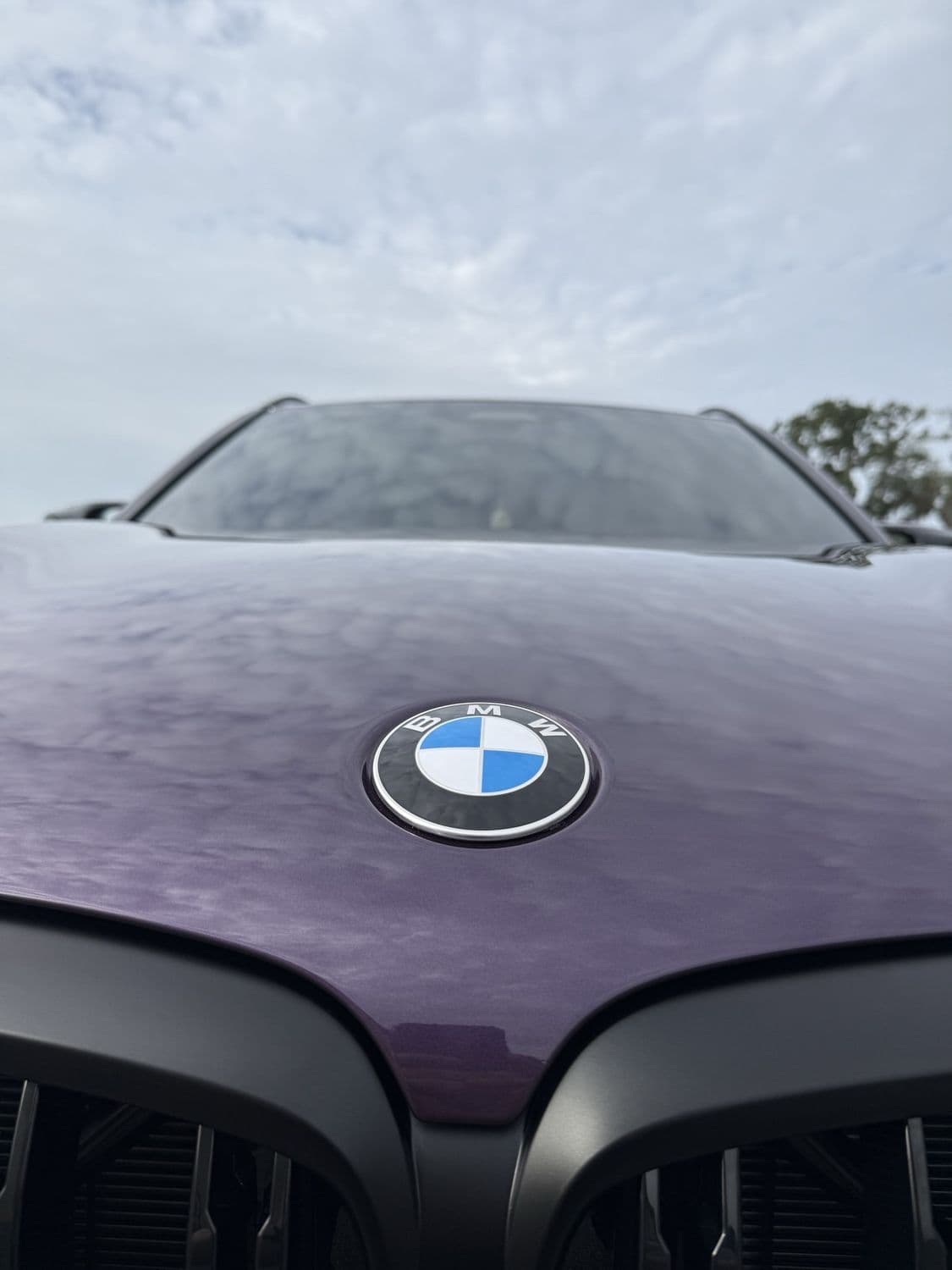
A few weeks ago a customer named Leah texted us a question. Her 2026 X5 was still on the carrier somewhere between the dealer and Wildwood, and she'd already committed to paint protection film.
"Do you recommend doing a ceramic coating over the PPF?"
Underneath that question was a fairer one, the one most people are actually asking: is this a second thing I genuinely need, or is this the shop finding another line item?
Worth sitting with for a second. If you've looked into this at all, you've probably read a dozen articles framing PPF and ceramic coating as a choice. Pick one, walk away. So the natural assumption is that buying both means you got talked into something.
Here's what we told her.
PPF or ceramic coating, what are you actually trying to prevent?
Before the products matter, it's worth asking what you're protecting against, because there are two completely different things that ruin a finish, and most people are only thinking about one.
The first is impact. Rock chips, road debris, love bug season, a cart in a parking lot. Physical damage that takes a piece out of the paint.
The second is slower and it's the one people underestimate: contamination and UV. Bug guts and bird droppings that etch if they sit. Sun working on the surface every day it's parked outside. Wash-induced swirls that accumulate over years until a dark car looks hazy in direct light.
So a question worth answering honestly before you spend anything: where does your car actually live? Parked outside most days, or in a garage? Mostly short trips around Wildwood and The Villages, or regular runs up CR-466 and out onto I-75 where debris comes at the car from every angle?
Those answers change the recommendation more than the brochure does.
Because those two problems don't have one shared solution. Film is a physical barrier. It takes the hit so the paint doesn't. Coating isn't a barrier at all; it changes how the surface behaves so contamination doesn't bond and dirt releases easily.
Asking which one you need is a bit like asking whether you want a phone case or a screen protector. They aren't competing for the same job.
Doesn't paint protection film already have a coating on it?
The moment you accept the film, a reasonable objection shows up: doesn't quality film already come with a top coat?
It does. Ours does. So why pay for another layer on top of it?
This is where it helps to read what the film manufacturer actually says rather than what a shop tells you. The film on this X5 is CovrGard GLOS, and it's a strong product. It passes the ASTM D3170 gravelometer test with no ruptures, which is the standardized test where gravel is fired at a panel. It shows under 1% color change after 1,000 hours of accelerated UV testing. It's warranted up to ten years against crazing, cracking, bubbling, and UV degradation.
That's a serious warranty. But read the condition attached to it:
"In order for the product to remain in excellent condition it is important that the regular after care procedures are followed repeatedly during ownership."
The ten years is conditional on maintenance. It was never a promise that the film sits in Florida sun for a decade with nothing asked of you.
And here's what CovrGard writes in those aftercare instructions, about their own top coat:
"this can be further enhanced with the application of coatings and sealants"
So the honest answer to Leah's question isn't "trust us, it's better." It's that the company that made the film recommends putting a coating on it.
They add one caution we take seriously ("not all products are suitable"), which is why the choice of coating matters more than whether you get one. We used CARPRO CQUARTZ DLight, which is formulated for paint protection film rather than being a general paint coating used somewhere it wasn't designed for. It absorbs UV across the band that causes yellowing and cracking in clear films, instead of just sitting on top adding gloss.
What that means for you: the film has a sacrificial layer above it taking the UV hit first, the aftercare condition on your warranty is being satisfied rather than quietly ignored, and the thing you paid the most for stands a real chance of lasting as long as it's rated to.
Does that distinction make sense so far?
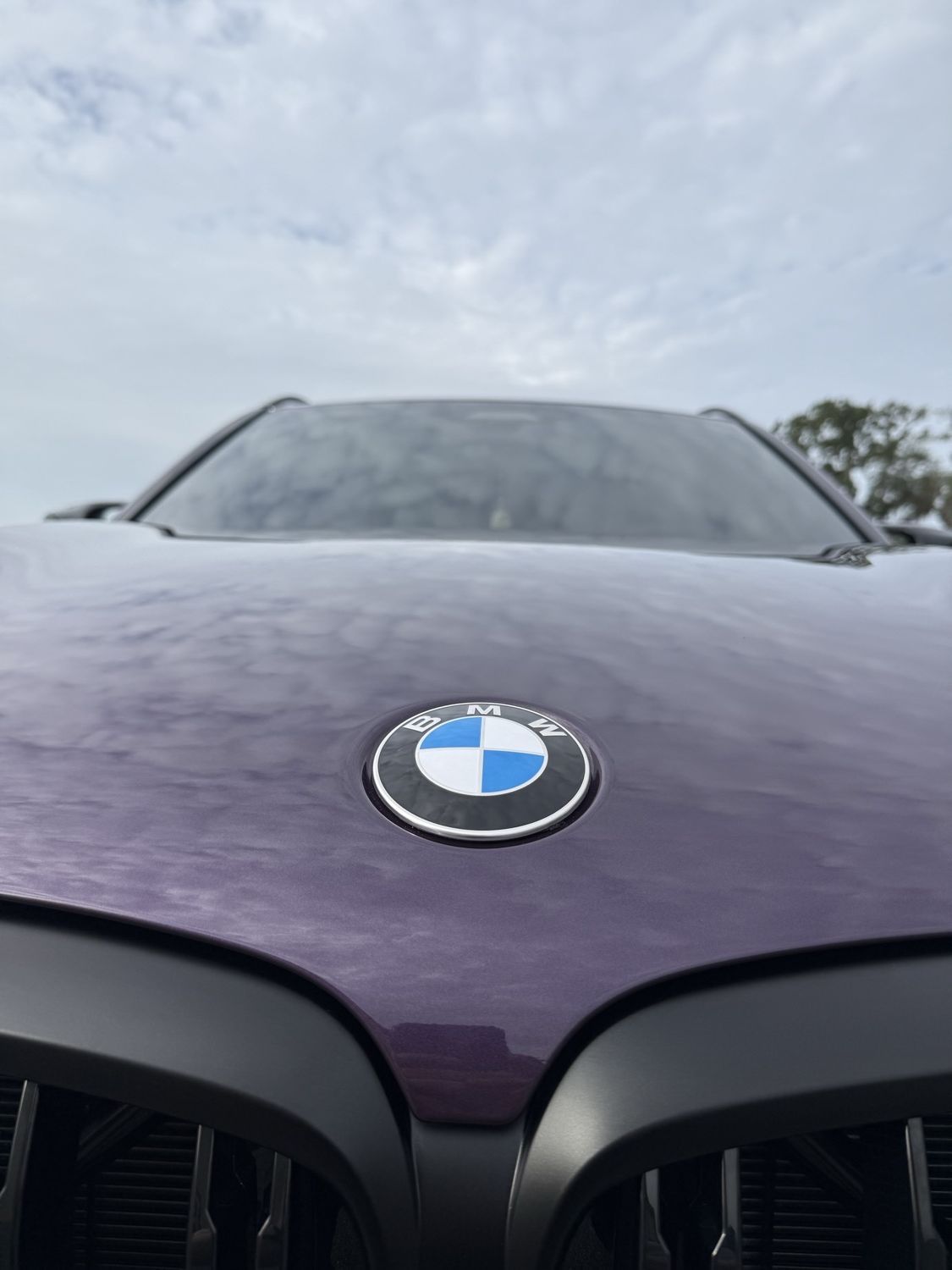
Two full body PPF installs can look identical on day one
Here's something that doesn't show up in photos, and it's the part we'd want a customer to understand before comparing quotes anywhere.
Film has to end somewhere. What happens at that edge is the whole thing.
The faster way is to lay film over the panel and trim it at the edge with a blade, right on the car. On delivery day it looks correct. The question is what that edge does over two or three Florida summers of pressure washing, road grime, and heat, because a cut edge sitting on a painted surface is where dirt collects and where lifting starts. And anywhere a handle or a marker or a trim piece is in the way, the film simply stops short of it.
So if you're weighing options anywhere, that's the question worth asking: what happens at the edges, and does anything come off the car?
On the X5, we took it apart. Door handles, exterior trim, window trim, and side markers all came off so the film could wrap around and behind the edge instead of ending on top of it.
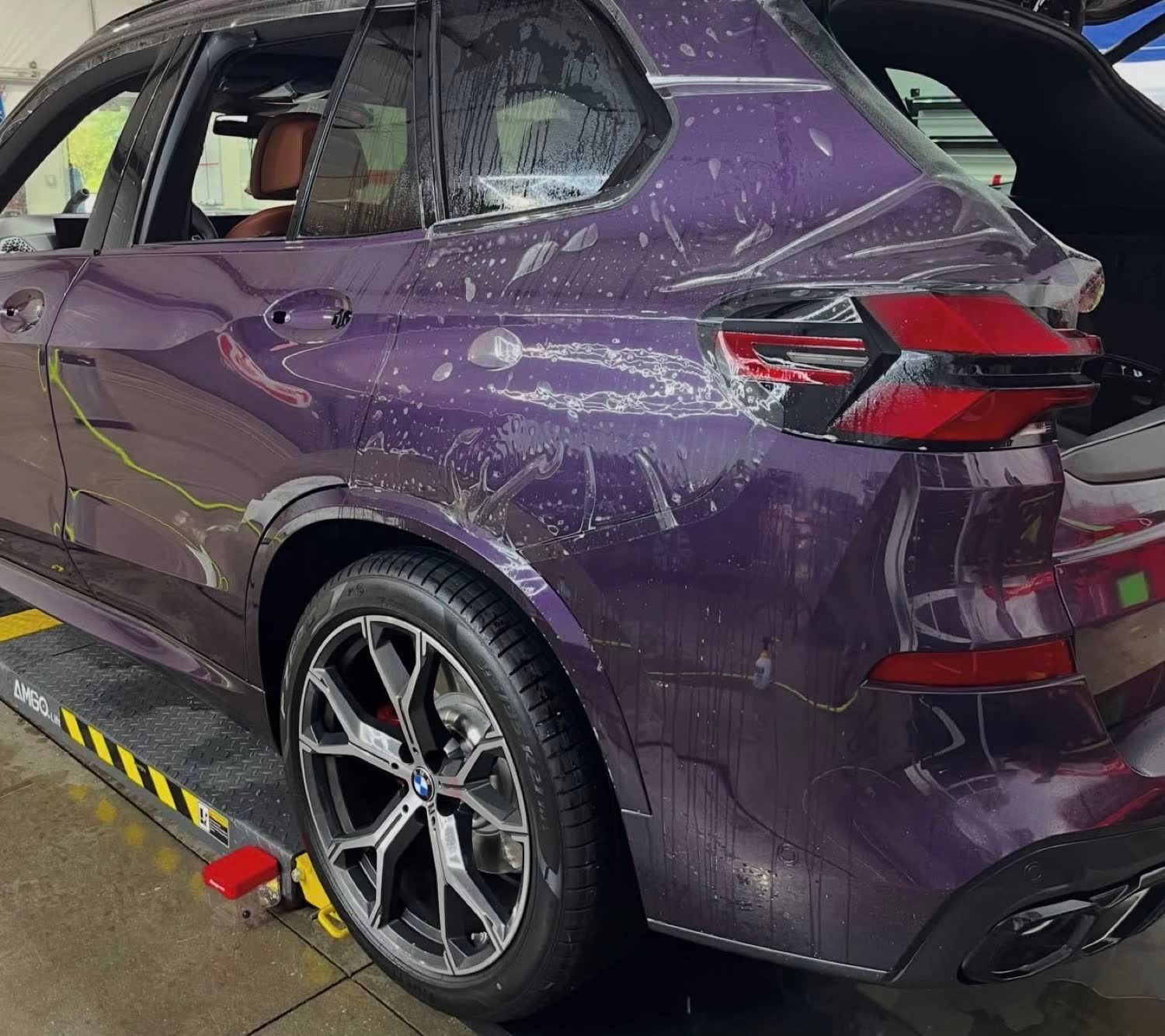
That's the X5 on the lift, mid-install. Look at the doors. The handles are off. Those open recesses are where they were. The film is laid wet over the quarter and left running long past the hatch, because it hasn't been wrapped and tucked yet.
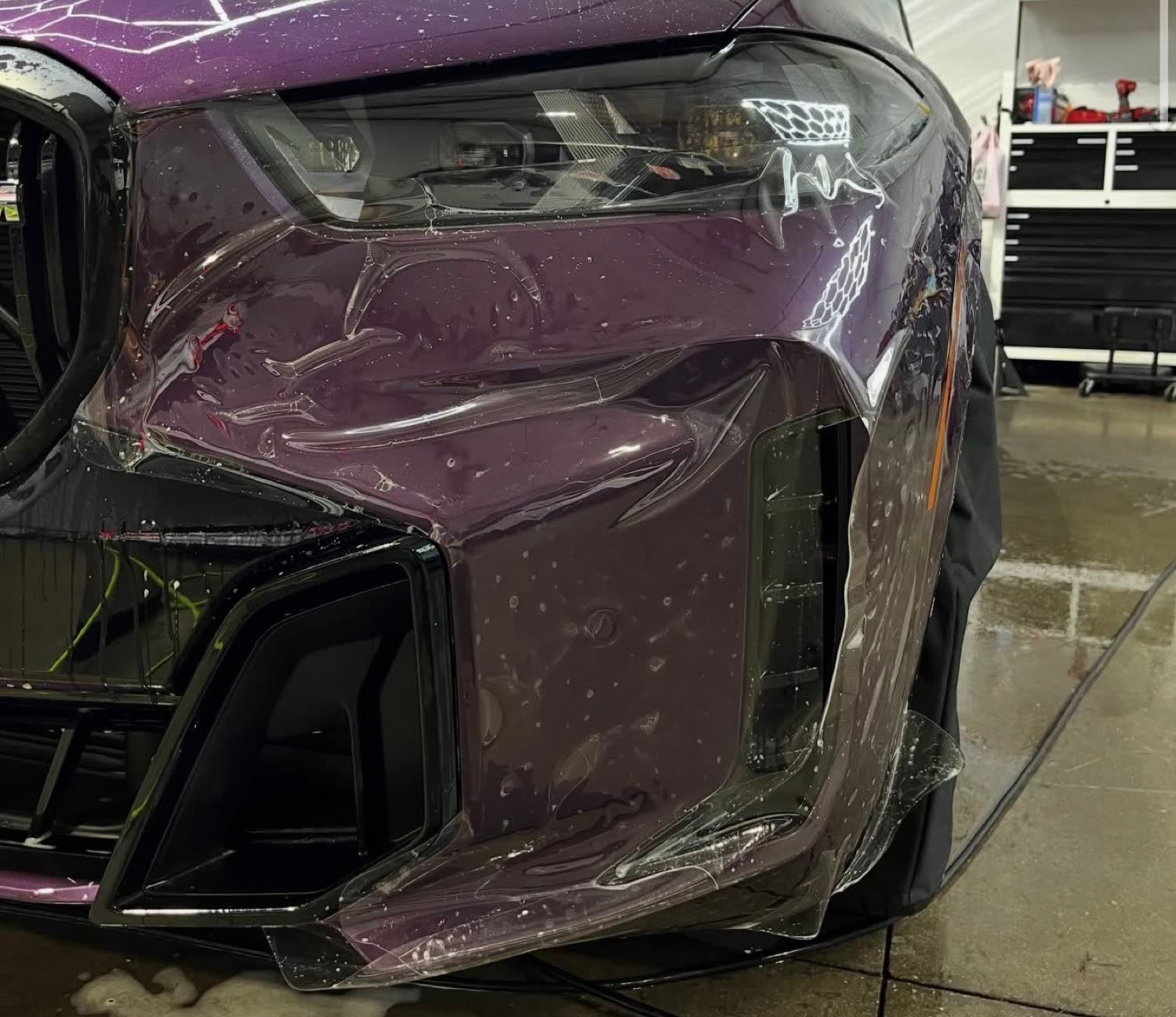
Same thing at the bumper. The film hanging loose past the bottom edge isn't sloppiness. It's there to be wrapped around behind. Film cut flush at an edge is film with somewhere to start lifting.
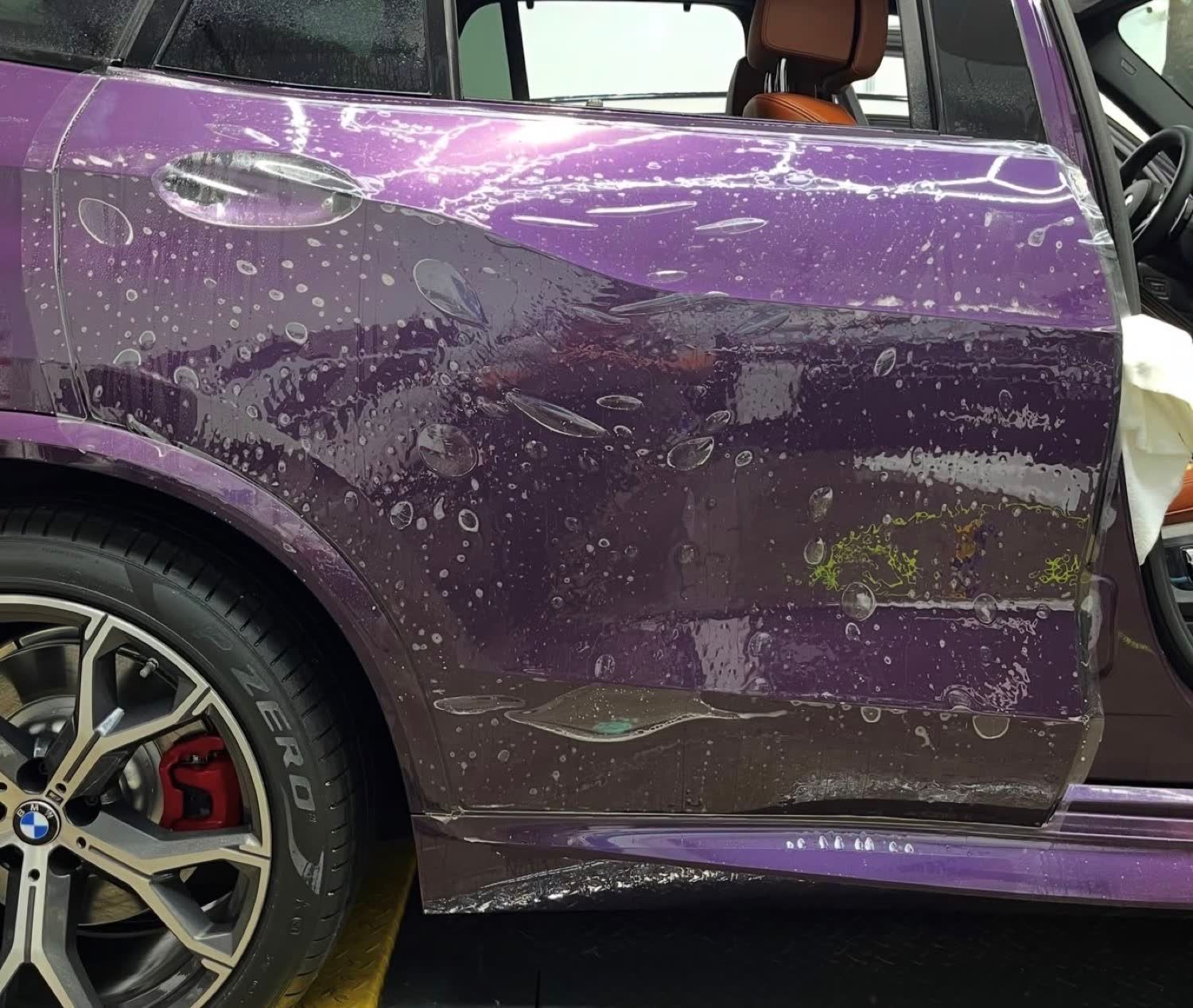
And reassembled:
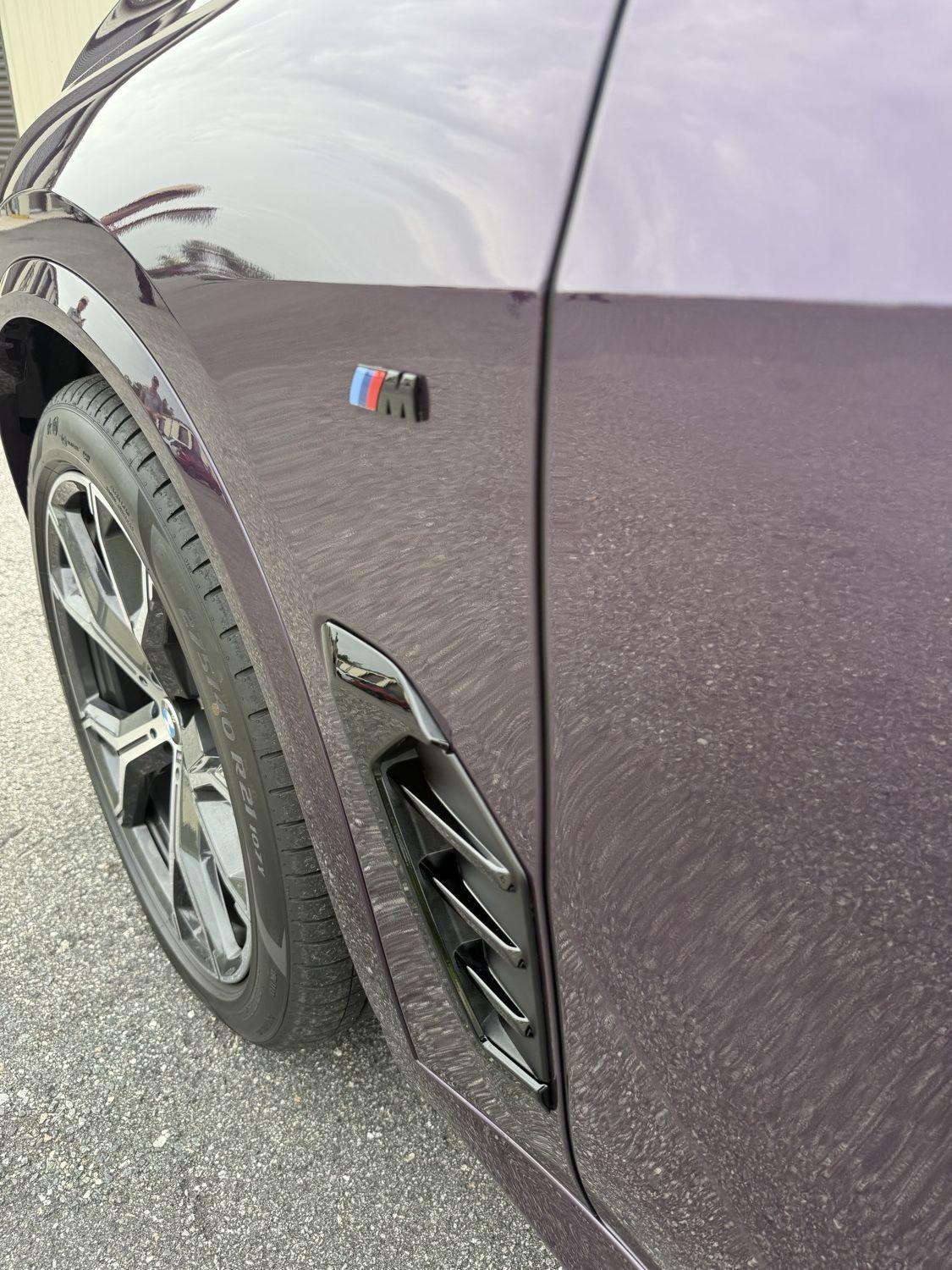
No seam, no line, no lifted corner, nothing that tells you the panel is covered at all.
What that means for you: there's no edge for dirt to work into, nothing for a pressure washer to catch, and in three years the car still looks like it does in that photo rather than showing you where the film stops.
That's why this build took five days. Taking a vehicle apart and putting it back together is most of the labor. It's also the part you can't see afterward, which is exactly why it's worth asking about beforehand.
The dealer mistake that costs people money twice before a PPF install
Leah did something on her own that we wish more people knew to do.
Her X5 was shipping straight from the dealer, and they were pushing their paint protection package. She declined it, and she opted out of their hand wash as well, so that every bit of the prep was done here instead.
That was the right call, and here's why it matters: dealer-applied sealants interfere with film adhesion, particularly at the edges and wrapped areas where the film has to hold a curve. It has to come off before we can install.
So if you buy it, you pay for the product, then you pay for the labor to remove a product that was working against the job you actually wanted. Two charges, negative value.
If you have a new vehicle inbound and film is anywhere in your plans, decline the dealer's protection package. We decontaminate every vehicle ourselves during prep regardless. There's nothing the dealer needs to do first.
When full body PPF isn't the right call
Full coverage isn't automatically the answer, and we'd rather tell you that than sell you the biggest number.
It's worth it when the car is new or near-new with paint worth preserving, when you're keeping it a while or resale matters, when you're running highway miles where debris hits more than the front end, or when the color is expensive to repair.
That last one applied here. This X5 came in a deep purple, and a chip in a color like that isn't the same problem as a chip in silver. Matching it takes blending, blending a metallic rarely disappears completely, and you're then explaining a repainted panel to a buyer down the road. The gap between protecting it and repairing it is significant enough that the decision mostly makes itself.
But if the vehicle is older, if you're not keeping it long, or if the budget does more good somewhere else, front-end coverage is the smarter buy and we'll say so. There's no version of this where we'd rather sell you more than you need and have you feel it later.
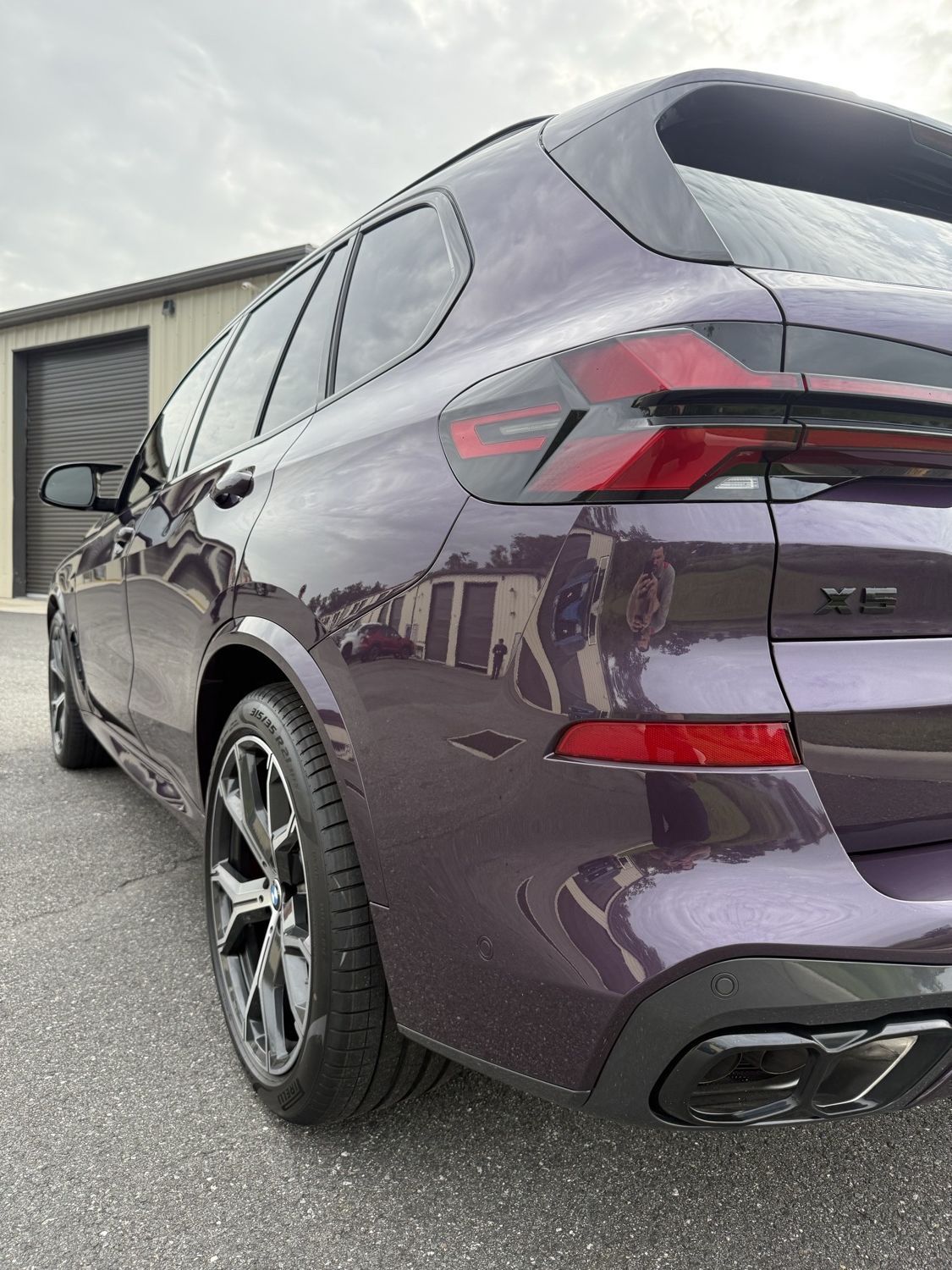
The tint went on in the same visit
Leah also had us do every window, sunroof, and windshield included, with ceramic window tint blocking up to 98% of the heat you feel.
Sequencing it that way isn't just convenience. The vehicle is already here, already decontaminated, already prepped. Splitting the work across separate visits means paying for prep twice and putting the car back into road exposure in between.
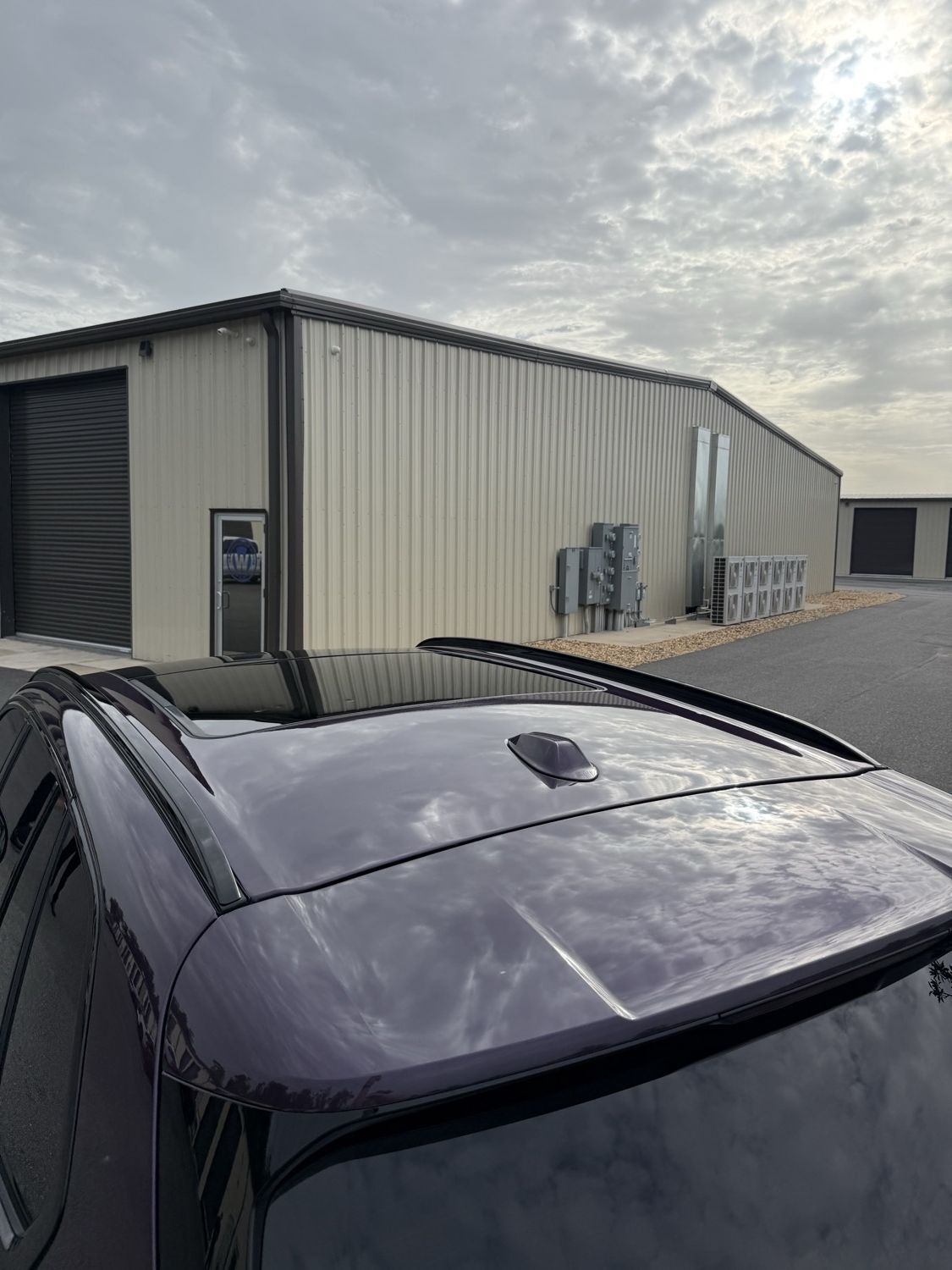
The honest version
PPF and ceramic coating were never alternatives. Film handles impact. Coating handles contamination and takes the UV hit for the film, which is what the film's own manufacturer asks you to do in order to keep its warranty intact.
Leah worked that out on her own and asked directly, which is why her X5 left here with full-body CovrGard GLOS, CQUARTZ DLight over the top, and tint on every window.
One thing worth knowing if you've just had film installed anywhere: leave it alone for the first 48 hours while the adhesive cures. You may see moisture haze under it during that window. That's normal, and it evaporates.
So the question worth sitting with isn't really which product to buy.
It's what your car is going to be sitting in for the next five years, and whether what's on it right now is actually built for that.
If you're not sure, that's a reasonable place to be. Send us what you're driving and where it's parked, or call (352) 251-2008, and we'll tell you honestly what we'd do, including when the answer is less than what you were expecting to spend.