
Does PPF Stop Rock Chips? What Film Can and Can't Do
Does paint protection film stop every rock chip? What PPF really does at highway speed, where ceramic coating fits, and why we tell people it's not body armor.
 By Chais Chavis, owner of Polished to Perfection
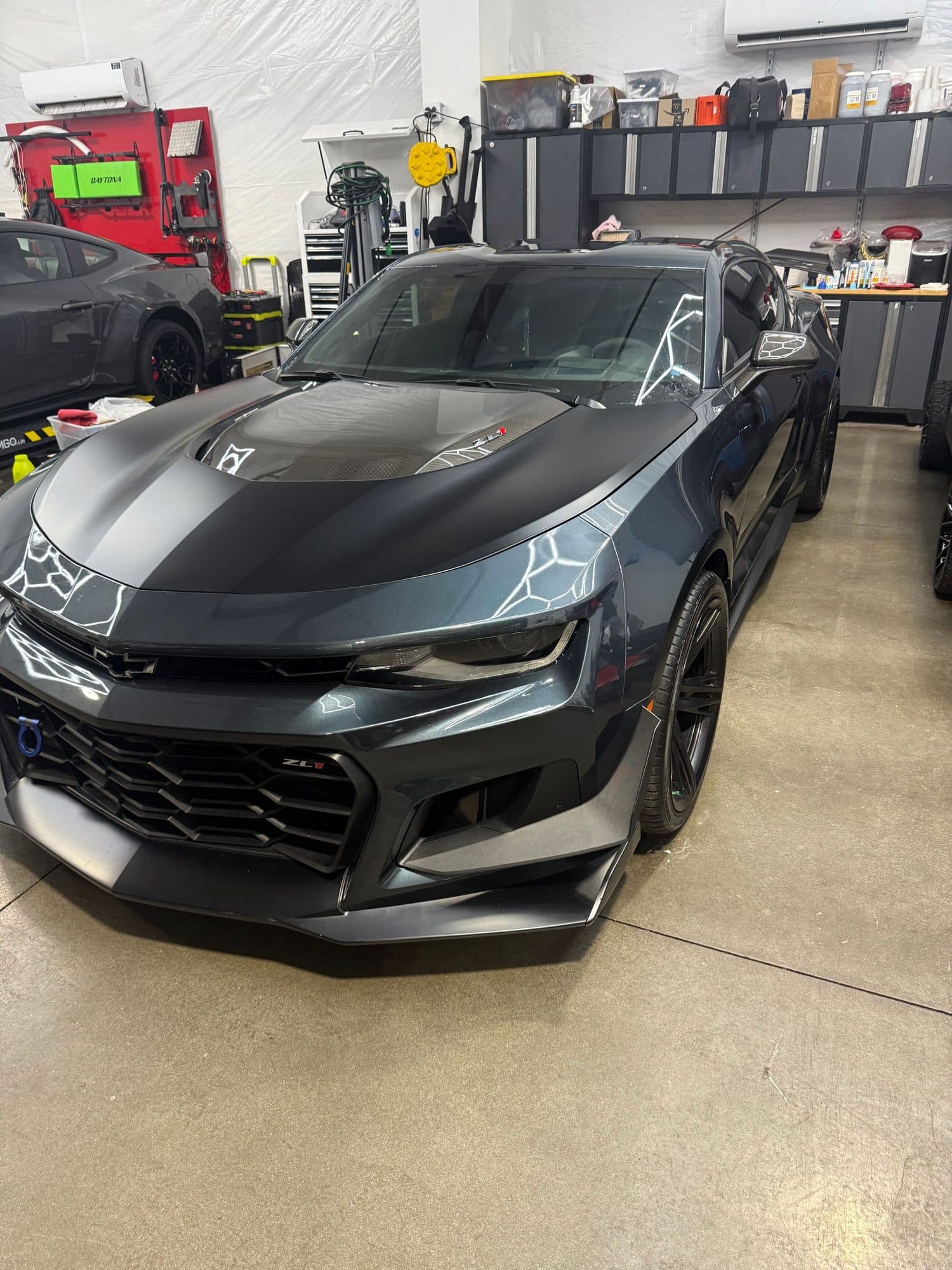
Paint protection film stops most rock chips, but not every one. It's a physical barrier that takes the hit so your paint doesn't, and on the front of a car that sees the highway it prevents most of the chips you'd otherwise get. What it isn't is body armor. A big rock at 80 or 90 miles an hour can still do damage. The film's job is to cut that damage way down, and it does that well. We say this to everyone who asks about film at our shop near The Villages, because it's better to hear it before you buy than after. Chais explains it in under a minute in the video at the bottom of this post.
What PPF actually does when a rock hits
Paint protection film (people also call it clear bra) is a thick, clear, self-healing layer installed over the painted panels that take the most hits: the bumper, hood, fenders, and mirrors. When a rock or a piece of road debris hits a filmed panel, the film absorbs the impact and spreads it out instead of letting a sharp edge reach the paint.
Most of the time that means nothing happens at all. You might see a small mark in the film. Light marks and scratches in the top layer heal on their own when the car sits in the sun or gets a rinse with warm water.
Why we tell people it's not body armor
Film is tough, but physics still applies. A rock thrown off a dump truck tire at highway speed carries a lot of energy, and every so often one hits hard enough or sharp enough to cut through the film or dent the panel under it.
The difference is what's left afterward. Without film, that rock leaves a chip down to the primer, and every one after it adds another. With film, most hits leave nothing, and the occasional bad one is far smaller than it would have been. If the film itself gets damaged, that section can be replaced, and the factory paint underneath is still original.
So the honest way to think about PPF: it doesn't make your car invincible. It makes rock chips rare instead of constant.
Where rock chips actually happen
Most chips happen at speed, on the front of the car:
- Behind trucks and trailers. Gravel haulers, landscaping trailers, and dump trucks are the usual suspects on I-75, US-301, and the Turnpike.
- Construction zones. Loose sand and stone get kicked up by every car ahead of you.
- The leading edges. The front bumper, the front of the hood, the mirrors, and the headlights take the most hits because they meet everything first.
That's why our PPF packages are built around the front end. A car that mostly stays on the roads around The Villages takes far fewer hits than one that runs up the interstate every week.
What PPF doesn't protect against as well as ceramic coating
Rock chips are physical damage. The other thing that ruins paint here is chemical damage: love bugs, bird droppings, and tree sap that etch if they sit in the sun. Film helps with those too, but a ceramic coating is built for them.
A ceramic coating is a chemical layer that typically goes over the entire car, often the wheels and glass as well. It makes the car much easier to wash and keeps bugs and droppings from bonding to the surface. It won't stop a rock, though. A coating is far too thin for that. Our ceramic coating vs PPF guide lays the two side by side.
The hybrid: film on the front, coating on the rest
A setup a lot of our customers choose is both:
- PPF on the front end: the fenders, hood, bumper, and mirrors, where the chips happen.
- Ceramic coating on the rest of the car, so the whole thing is easier to wash and protected from bugs and droppings.
- Ceramic coating over the film too, so the film stays slick, clean, and easy to wash.
That combination covers both kinds of damage without wrapping the whole car. If you want to see which film coverage fits how you drive, PPF packages explained walks through each one.
So is PPF worth it if it can't stop everything?
For most people who drive the highway, keep their cars for years, or just bought something new, yes. A car that would have collected dozens of chips on the front end over a few years comes out with few or none. If your car mostly stays in town and lives in a garage, a ceramic coating may give you most of what you want. We go through who it pays off for in is paint protection film worth it.
Get a straight answer for your car
Send us the year, make, and model and tell us how you drive. We'll tell you honestly whether you need film, a coating, or both. Call or text (352) 251-2008, or request a paint protection film quote.